
Dream Amnesia

Came across a video that piqued my interest. It’s called “The sinister truth behind why you can’t remember your dreams.” It has some good information that gives an insight into dreaming. Not sure who put out this information because it sounds like the video was generated through the use of artificial intelligence (AI) .
Did the person who made the video collect the information then used an AI application to do the narration, or did the AI compile the information and did the narration. Hell, this is even giving me ideas to do a video of my own using AI.
Anyway, being that I can recall key events of some dreams let’s look at this message about what is behind the reason why we forget our dreams. Maybe I can identify the reason why I’m able to recall some dreams.
The first thing that the video pointed out, is that the mind has evolved to make us forget about our dreams as a safeguard to protect us, and to distinguish reality from the chaos of the dream world.
I disagree that the dream world is a place of chaos. If anything, the dream world is a representation of the mind, and if a person’s dream space is chaotic, then that person’s mind, perhaps what is going on in their life is chaotic.
Yeah, there is a pandoras box of questions concerning dreams, whether the protective mind is letting us forget them, or not.
During sleep, our minds enter a state of altered consciousness, the area of the brain that we call the “prefrontal cortex, “that is responsible for our logic reasoning and decision making will step back and take a back seat while other areas of the brain begins to light up.
This creates a subjective environment within the brain for dreams to flourish. Dreams themselves can be a vivid experience and will feel real. Then after we wake up, the dream experience begins to fade. Even the most vivid dreams. This phenomenon is known as “dream amnesia.”
Now the suggestion is that when we wake up from sleep, that the brain produces a chemical cocktail that makes it difficult for the dream to become part of our conscience experience. Preventing the subjective experience (dream) to be part of our short term and long-term memory.
There are several theories of the so-called sinister reason why we forget our dream experience. It begins with the “Firewall Theory.”
This theory asserts that since a dream experience can defy the laws of physics and logic and we’re able to do things such as breath underwater, fly, or experience scenarios that makes no logical sense, that the protective mind is erasing the dream memories from our conscience so that there is no confusion of what took place in the dream space and what is taking place in realty. The protective mind doesn’t want us to blur the line between the dream space and reality.
There are also psychological implications if the lines between fantasy and reality are blurred. Studies of people with schizophrenia suggest that those people find it difficult to distinguish between the dream space and waking reality.
The next theory is called “The Emotional Overload Prevention System.” This theory suggests the forgetting of dreams is an emotional buffer.
In a dream we may experience intense emotions such as intense happiness, paralyzing fear, or crushing sadness. Even if we don’t remember the details of the dream, the emotions that we felt may still linger on crossing over into the waking reality.
The protective mind does not want us to experience an onslaught of unnecessary emotions, that can overwhelm us as we live life. Thus, by making us consciously forget the dream experience it will not allow those emotions to cross over making us carry extra emotional baggage.
Another study suggests that people with a high degree of dream recall score higher on tests of neuroticism and emotional sensitivity. That the forgetting of dreams could be an indicator of emotional protection.
Well, this is where true_George is in disagreement. As you can see by going through my dream journal, there is a high degree of dream recollection then what most people can say.
Now keep in mind, that there are dreams that I didn’t get a chance to write down for one reason or another. Anyone can tell you that I have no issues of neuroticism or emotional sensitivity.
The third theory is called “The Subconscious Sorting Station.” The question is “What if dreams are part of the process where we sort out and integrate information?”
Well, some scientists believe that dreams serve this purpose by taking all the information that we experience during the day. Shift through them, sort out integrate, discard or consolidate the information into our memory.
In retrospect the dream serves as a feature to make connections, sort of material information to solve problems. Once this process is complete then there is no need to retain the memory of the dream itself, because the important bits of information as been stored into our long-term memory.
Studies have shown that during sleep that the brain has replayed and strengthened neural pathways that are associated with learning new skills. This is done as we dream, and perhaps explains why we wake up having come up to the solution to a problem.
The process ends with the forgetting of the dream as the clean up to the whole process.
The fourth theory is called the “Creativity Crucible.” This theory suggest that dreams have long been associated with creativity. For example, Mary Shelly wrote the story “Frankenstein” after having a nightmare, and the Musician Paul McCartney wrote the song “Yesterday” after hearing the melody in his dream. Many other artists have produced great works having got the idea, or inspiration through a dream.
In this instance the partial recall of the dream may be a crucial process necessary for creativity. Waking up remembering fragments of a dream, we use our creativity to fill in the blanks.
A study that was published in the journal “Sleep,” that people who were awakened during Rapid Eye Movement (REM) sleep when dreams are most vivid, showed increased creative problem-solving abilities.
Creative problem-solving abilities were developed as a result of being awakened during REM, as opposed to being developed as a result of the contents of a dream.
The fifth theory is “Memory Consolidation Mechanism.” During our dreams, especially during REM, the brain is constantly transferring information from short term to long term memory. The brain works to strengthen important information and the narratives as we dream. When the brain completes this process, the dream is sacrificed as the brain puts everything together. Thus, forgetting dreams is a side effect of this process.
A study in the journal “Cell,” suggests that the same mechanism in the brain that allows us to forget unnecessary details while awake, are also active at night during sleep. This suggests that forgetting dreams are part of a larger memory optimization.
One can think of it like a computer cleaning its cache. By forgetting the dream the brain might be freeing up mental resources and strengthening memories of things that are useful to us during our waking lives.
Perhaps it explains why we remember fragments of a dream of our current concerns of a recent experience. This may be part of memory consolidation, while the surrounding dream narratives fade away.
The sixth theory is “The Parallel Universe Protection Program.” Keep in mind that some theocratical physicists propose that there is the existence of a parallel universe and alternate realities.
In these alternate realities and parallel universe different versions of our lives are being played out. The premise is, “What if the alternate realities and parallel universe have something to do with our dreams?”
Well, there are theories that dreams may give us a glimpse of the alternate realities, and parallel universe. Having dream amnesia is a protective mechanism preventing us to become too much aware of the alternate realties and parallel universe.
Given that the idea is speculation, there is a scientific explanation. The study of quantum physics has shown that some particles can simultaneously exist in multiple states. Given this condition, some scientists and philosophers have purported the existence of multiple realties.
A study that was published in the journal “Physical Review X” has demonstrated that it is theoretically possible that two different observers can experience two different realities in the same space.
While this in itself does not prove the existence of a parallel universe, it does give us a hint that the nature of reality can be complex. Now, forgetting dreams could be a crucial factor of us maintaining our sense of being in a single coherent reality. The protective mind has created this barrier to shield us from sensing our multiple selves in different realities.
True_george finds that this idea of the concept of accessing a parallel universe has more to do with astral projection then dreams. One may confuse an astral projection experience with a dream, but the feel is different, plus an astral projection experience is something that does not fade from memory.
The seventh theory is called “The Evolutionary Advantage of Forgetting.” This brings up the question, “Why would our brains evolve to forget dreams if remembering the dream gives us an advantage?
Well, some evolutionary scientists suggest that forgetting dreams might have been beneficial for the survival of our ancestors. It is purported that dwelling on dreams in a harsh prehistoric world could be a dangerous disadvantage.
For example, imagine that a caveman be pre-occupied with last nights dream while a predator lurks nearby. Forgetting the dream would allow the brain to distinguish the dangers of real life, and not the non-dangerous world in the dream space. That way, the person can focus on what is a danger to them in their environment.
This theory is supported by research that suggests that a dream with survival or threatening content is highly likely to be remembered than a dream containing some sort of neutral content.
It seems that the brain has a priority system that prioritize survival, thus it retains the memory of dreams that contains a survival scenario. Also having to recognize the difference between an imagined and real event is crucial. So, the forgetting of the dream will help streamline this process.
The eighth theory is the “Conscience Calibration Tool.” The premise is, “What if forgetting dreams is crucial for maintaining our sense of self.”
Yeah, you have some philosophers and nuero-scientists proposing that our consciousness and subjective experience of self needs to be constantly recalibrated. The forgetting of dreams play a key role in this process.
During sleep we pass through a wide range of states. From being awake, to light sleep, to deep sleep and then rapid eye movement (REM} sleep where the most vivid type of dreams occur. Each of those states have a unique configuration of consciousness.
This is backed up by a study that was published in the journal “Trends in Cognitive Scientist.” The study suggests that cycling through the different states of consciousness could be essential for maintaining a stable sense of self during our period of being awake. It reinforces that being in the waking state of conscious is the state that we are in.
Maybe, we can think that it is similar to re-booting a computer. As the brain goes through each sleep cycle, it is clearing the cache wiping the dream from memory to ensure that things run smoothly when we are in the waking conscious state.
The theory could explain why people who remembers too many dreams sometimes report being disconnected from reality. Some have reported having a blurred sense of self.
It could mean that the brain may not fully re-set itself while going through each state of consciousness during sleep.
The ninth theory is “The Quantum Mind.” This theory ventages into the combined area of quantum physics and nuero-science. The theory is putting fourth the idea that our brains might be operating on a quantum level.
Quantum mechanics deals with the behavior of matter and energy at the atomic and nuclear level, and even smaller microscopic levels. At these types of levels, the rules of classic physics breakdown, and particles can exists in multiple states simultaneously. This is known as “superposition.” The theory itself is controversial.
The theory suggests that consciousness arises from quantum processes in structures called “microtubules” within the brain’s neurons.
The suggestion that in the quantum view of the mind, dreaming could be a state where the brains explore multiple possibilities at the same time. Forgetting dreams could be compared to a quantum system collapsing down into a single state.
A study in the “journal of physics life,” explored the possibilities of quantum effects in a biology system, which includes the brain.
While this study didn’t have any concrete conclusion, it does open the door that leads into new roads of understanding the consciousness mind and memory.
If the brain does what is purported on the quantum level, then forgetting the dream is a necessary reset, allowing the brain to start fresh each day without being bogged down by the memories of the levels it accessed the night before.
As you can see, the mind is a complex instrument. There could be many factors behind what the mind does.
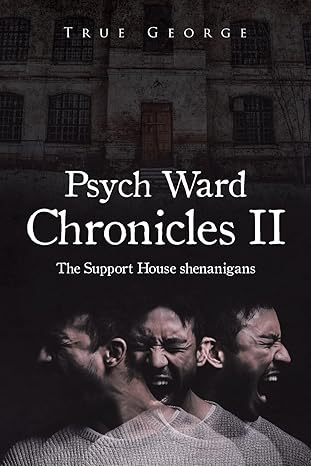
Psych Ward Chronicles II: The Support House Shenanigans
Ten short stories of the soap-opera environment in a state-sanctioned congregate care level II facility for the mentally ill, aka support house for independent living. The support house is privately owned and operated. Stories follow the challenges as experienced by residents and staff
$15.00

Wasn’t Meant To Be: 4 Sagas of Toxic Romance
1.Cesspool of Corruption: Sam a corrupted civil servant has fallen for one of his clients and he engages in unethical behavior in hopes of being with her. 2. Love in the Garden: Adam and his wife Lilith have marital woes; God decides to intervene and hatched a plan to separate them, but things did not go as planned 3. The Sultry Affair: Jack meets Carmen; it was lust at first sight, they spend some time together in the most unlikely place, where their true feelings came out. 4. Infection: Jose gets reacquainted with Jessica and invites her to spend to time with him while Jessica is waiting for her new place to be ready. Jose unwittingly got more than he bargained for
$15.00

M.A.G.A
E-Book The first story “Degenerates” is about a group of racist mischief-makers who wants to create mayhem and terrorize a neighborhood, but they recognized that they are not organized to pull it off. They found a group that specializes in organizing and provides training to other groups of racists and nationalists who need to learn how to take their activities to the next level. What they learned was something totally unexpected. The second story “Me Too,” is about a family of immigrants outraged because a family member was allegedly raped. They located the perpetrator’s home and they went there looking for justice.
$3.00

Night Watch
10 short stories of suspense and dark tales
$10.00
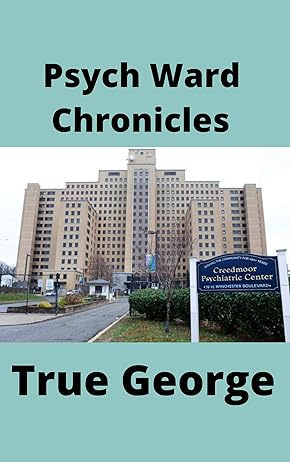
Psych Ward Chronicles
Details the experience of life taking place in a psychiatric ward. Who sponsors the Psychiatric institution; details the experience of the side effects of medication, inappropriate relationships, release, and readmittance; abandonment, frustration, race relations; rule violations; personality expressions; mother issues; delusionary expectations; suicide attempt and escape.
$10.00


 True_George